

The E-Learning Revolution
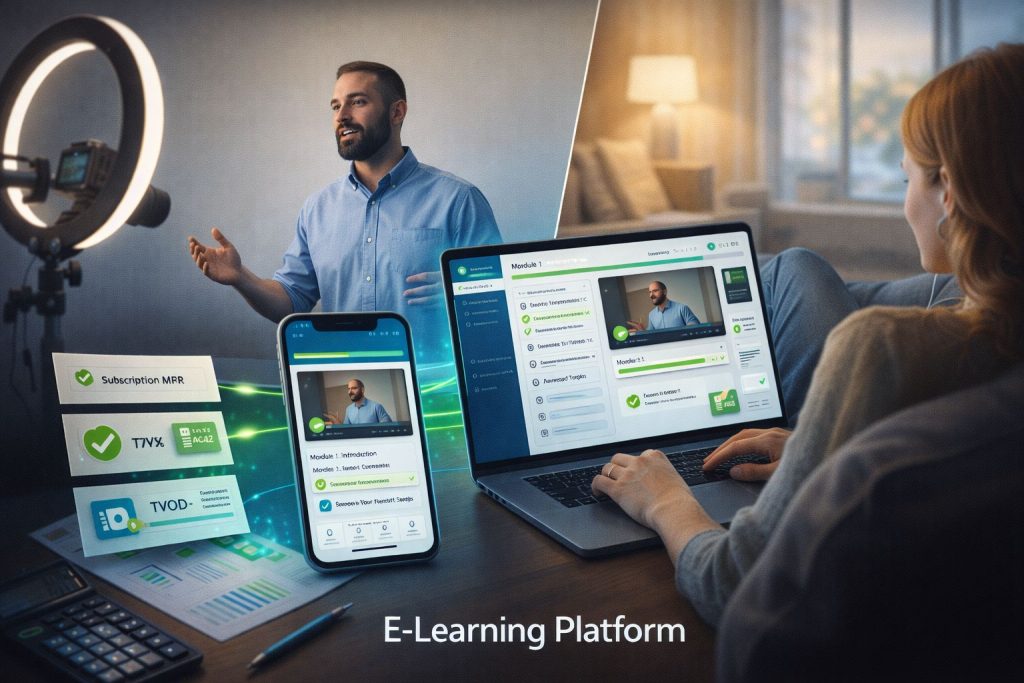
Online education has transformed from a niche alternative to a mainstream expectation. Whether you’re an educator, corporate trainer, or subject matter expert, video-based e-learning offers unprecedented reach and impact.
But success requires more than uploading videos to YouTube. You need a purpose-built e-learning platform that supports how people actually learn.
Why Video Dominates E-Learning
Engagement
Video combines visual, auditory, and emotional elements that text alone can’t match:
- Demonstrations show rather than tell
- Instructor presence builds connection
- Complex concepts become visual
- Learners stay engaged longer
Flexibility
Video-based learning fits learners’ lives:
- Learn anytime, anywhere
- Pause and resume at will
- Rewatch difficult concepts
- Control playback speed
Scalability
Create once, teach thousands:
- No classroom size limits
- No scheduling constraints
- Consistent quality for every learner
- Global reach without travel
Essential E-Learning Platform Features
Course Organization
Structure content for learning, not just viewing:
- Courses – Container for related content
- Modules/Sections – Logical groupings within courses
- Lessons – Individual learning units
- Prerequisites – Required completion before advancing
Progress Tracking
Help learners know where they are:
- Visual progress indicators
- Resume from where they left off
- Completion certificates
- Learning path recommendations
Interactive Elements
Passive watching isn’t learning:
- Quizzes – Test comprehension
- Assignments – Apply what’s learned
- Discussion forums – Peer interaction
- Q&A sections – Ask the instructor
Accessibility
Reach all learners:
- Closed captions and subtitles
- Transcript downloads
- Multiple language support
- Mobile-friendly design
Types of E-Learning Platforms
Course Marketplaces
Platforms like Udemy or Skillshare host your courses alongside others. You get built-in audience but limited branding and lower margins.
Learning Management Systems (LMS)
Systems like Moodle or Canvas focus on institutional education with robust administrative features but often dated user experiences.
Branded Video Platforms
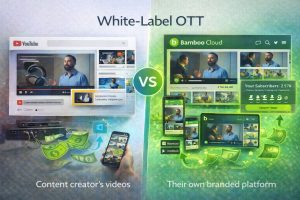
Purpose-built streaming platforms (like what Bamboo Cloud enables) give you full control over branding, pricing, and user experience while handling the technical complexity.
Monetization for E-Learning
Course Sales
One-time purchase for lifetime (or defined period) access to a course.
Subscription Access
Monthly or annual fee for access to your entire course library—great for platforms with multiple courses.
Certification Programs
Higher-priced packages that include assessment, certification, and credentials.
Corporate Licensing
Bulk access for organizations training their teams.
Content Strategy for E-Learning
Video Length
Research consistently shows shorter is better:
- 6-12 minutes optimal for engagement
- Break longer topics into multiple videos
- Each video = one concept or skill
Production Quality
You don’t need Hollywood budgets, but quality matters:
- Clear audio is essential (invest in a good microphone)
- Good lighting makes you look professional
- Clean, simple backgrounds reduce distraction
- Screen recordings need visible cursors and zooming
Instructional Design
Apply learning science:
- State objectives at the beginning
- Summarize key points at the end
- Include practice opportunities
- Build complexity gradually
Build Your E-Learning Platform
Bamboo Cloud provides the foundation for professional e-learning:
- Course organization with categories and playlists
- Progress tracking and completion status
- Subscription and one-time purchase options
- Mobile apps for learning on the go
- Branded experience that reflects your expertise
Launch your e-learning platform with Bamboo Cloud