

Leaving YouTube: A Migration Most Creators Do Badly
Leaving YouTube to build your own branded streaming platform is one of the most consequential moves a creator can make — and one most creators do badly. They announce it, launch the new platform, link to it once or twice, then watch their audience quietly stay on YouTube. The move isn’t just about putting your videos somewhere else. It’s about moving an audience, and audiences only move when the path is clear and the destination is better than what they’re leaving.
Here’s how to actually do it.
Why Creators Are Leaving YouTube in the First Place
The reasons compound over time:
- You don’t own your audience — YouTube does
- Monetization is at the mercy of the algorithm, demonetization, and ad-rate volatility
- You can’t contact your subscribers directly
- Content policies can change overnight
- Branding is YouTube’s, not yours
- Direct relationships (paid memberships, courses, communities) are hard to build and harder to keep
None of these are new. What’s new is that building your own branded streaming platform is now realistic for independent creators, not just media companies.
What You’re Actually Migrating
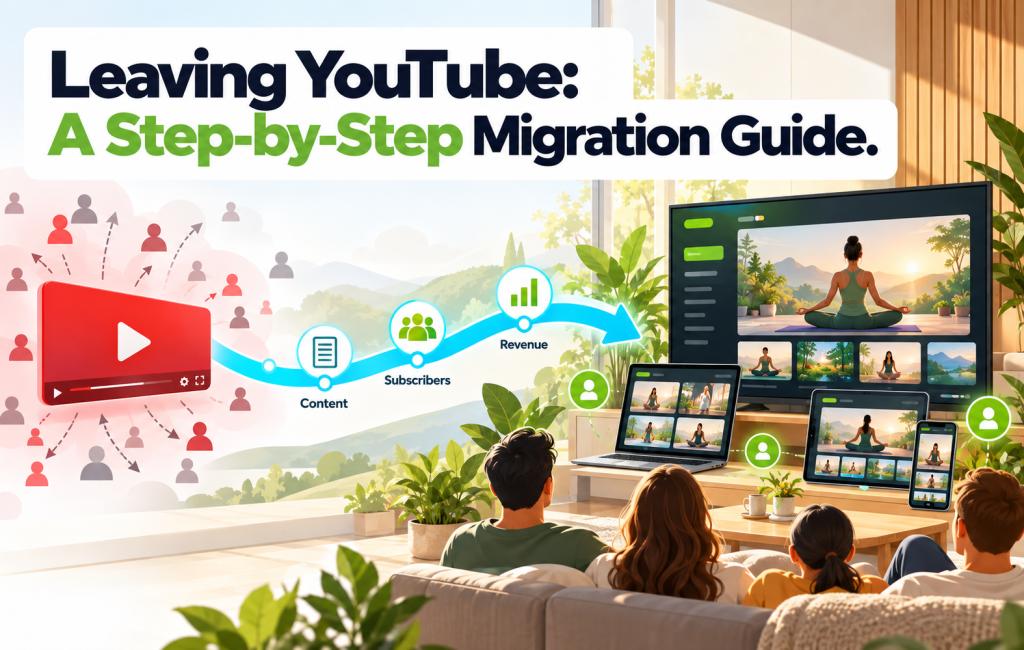
Four things, in rough order of difficulty:
- Content (easiest) — your video library
- Audience — the viewers who watch you
- Revenue — the dollars that follow the audience
- Habit (hardest) — your audience’s routine of coming to find you
Most migrations fail because the creator focuses on #1 (easy) and skips #4 (hard).
The 90-Day Migration Plan
Days 1–30: Build the Destination
- Launch your branded platform with your core content library already loaded
- Set up subscription tiers and payment
- Build the apps (iOS, Android, smart TVs) so viewers can watch where they already watch
- Create a simple onboarding flow for new signups
- Test everything with 5–10 trusted viewers
Days 31–60: Open the Bridge
- Soft-launch to your most engaged audience — email list, Discord, Patreon
- Offer early members a founding rate or lifetime discount
- Start adding small exclusive extras on the new platform — behind-the-scenes, extended cuts, member-only Q&As
- Keep your YouTube publishing cadence identical — don’t signal departure yet
Days 61–90: Make the Move Visible
- Announce the new platform in a dedicated YouTube video (not just an end-screen)
- Add platform links in every video description from this point forward
- Start publishing some content exclusively on the new platform
- Keep YouTube active with teasers, previews, and discovery-friendly short content
- Email every signup regularly — the direct relationship is the whole point
The Audience Bridge
Leaving YouTube only works if your audience follows you. The three bridge mechanisms that work:
- Email list — the single most important asset you own. If you don’t have one yet, build it before you migrate anything else.
- YouTube as a discovery channel — don’t delete it. Downgrade it. Use it to attract new viewers to your real platform.
- Exclusive content — give viewers a specific reason to visit the new platform, not just “it’s where my videos are now.”
Monetization: The Switch Takes Months
YouTube ad revenue starts dropping the moment you shift exclusive content off the platform. Your subscription revenue takes time to build. Plan for a 3–6 month revenue dip even in a well-run migration. Build runway accordingly.
What makes it come back faster:
- Multiple price tiers so different fans can commit at different levels
- Annual plans that lock in retention early
- Membership perks that compound (Discord access, Q&As, early content)
- One-off purchases (digital products, workshops, courses) alongside subscription
What You Lose When You Leave
Be honest about what goes away:
- YouTube discoverability — SEO and recommendation reach
- The casual viewer who’d never sign up for anything
- The social-proof vanity metrics (subscriber counts, view counts)
- The infrastructure doing itself in the background
What You Gain
- Direct relationships with every viewer
- Email addresses you own
- Pricing power and multiple revenue streams
- Content policies you set
- Branding that’s yours
- A business you own, not a channel you rent
The First Six Months
Leaving YouTube isn’t instant. Here’s what to expect:
- Month 1: Platform live, early members onboarded, revenue dip starts
- Months 2–3: YouTube ad revenue down, subscription revenue slowly building
- Months 4–6: Subscriptions compound, direct engagement rises, platform starts covering costs
- Month 6+: The platform becomes the primary revenue source, YouTube becomes the discovery funnel
Ready to leave YouTube and build something you own? Start your free trial today and launch on every device your audience watches on.