

Your Content Has Value—Capture It
You’ve invested time, effort, and resources into creating quality video content. Now it’s time to turn that content into sustainable revenue. But which monetization model is right for you?
The answer depends on your content type, audience, and goals. Let’s explore the options.
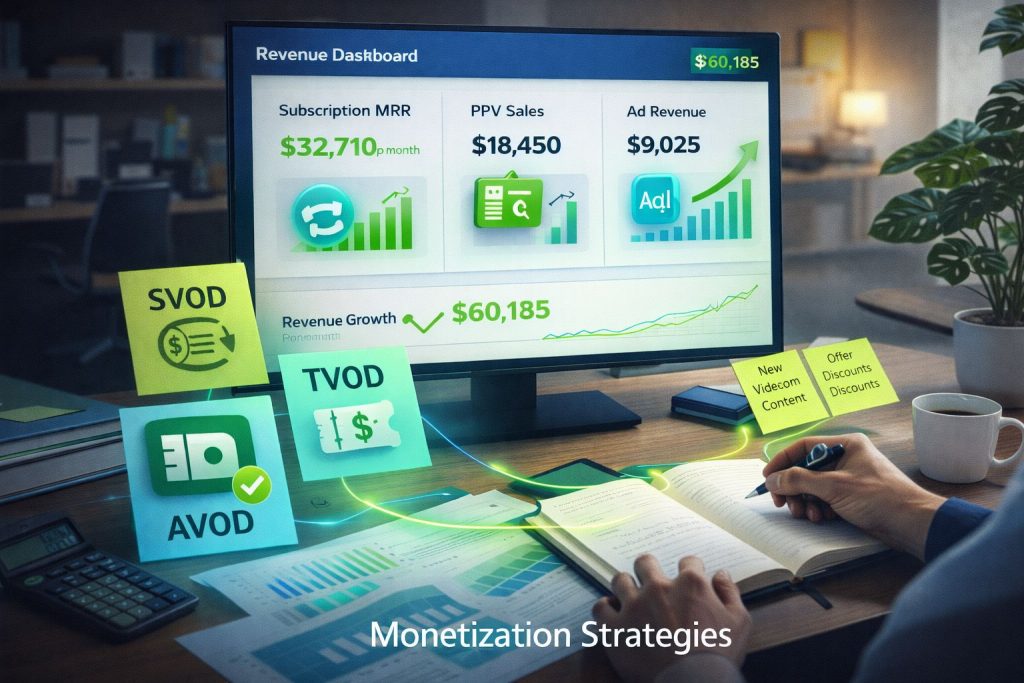
The Three Core Monetization Models
SVOD: Subscription Video on Demand
How it works: Viewers pay a recurring fee (monthly or annual) for access to your content library.
Examples: Netflix, fitness apps, educational platforms
Best for:
- Large, growing content libraries
- Content viewers want ongoing access to
- Loyal audiences who return regularly
- Creators who publish consistently
Pros:
- Predictable recurring revenue
- Builds long-term customer relationships
- Lower price point than one-time purchases
Cons:
- Requires consistent content to retain subscribers
- Churn management is ongoing work
- Harder to attract viewers for single pieces of content
TVOD: Transactional Video on Demand
How it works: Viewers pay per piece of content—either to own (purchase) or rent (time-limited access).
Examples: iTunes movie purchases, Amazon rentals, course purchases
Best for:
- Premium, high-value individual content
- Courses and educational programs
- Special events and exclusive releases
- Audiences who prefer ownership over subscription
Pros:
- Higher per-transaction revenue
- No ongoing commitment required from viewers
- Works for infrequent content releases
Cons:
- Less predictable revenue
- Higher price point can reduce impulse purchases
- No recurring relationship built-in
AVOD: Advertising Video on Demand
How it works: Content is free to viewers; revenue comes from advertising displayed before, during, or alongside videos.
Examples: YouTube, Pluto TV, ad-supported streaming tiers
Best for:
- Maximizing audience reach
- Content that appeals to broad audiences
- Building awareness before converting to paid
- Creators with very high view volumes
Pros:
- No barrier to entry for viewers
- Maximum reach and discoverability
- Can combine with other models
Cons:
- Requires massive viewership for significant revenue
- Less control over ad content
- Viewer experience includes interruptions
Hybrid Monetization Strategies
The most successful platforms often combine models:
Freemium
Offer some content free (with or without ads) while premium content requires subscription or purchase. The free content acts as a marketing funnel.
Tiered Subscriptions
Multiple subscription levels with different access:
- Basic tier with limited content
- Premium tier with full library
- VIP tier with exclusive content and perks
Subscription + PPV
Base subscription for regular content, plus pay-per-view for special events or premium releases.
Pay-Per-View for Live Events
Live events are perfect for PPV monetization:
- Concerts and performances
- Sports events and competitions
- Conferences and workshops
- Exclusive live Q&As
The urgency of “live” drives ticket sales, and recordings can later become subscription or TVOD content.
Choosing Your Strategy
| If You Have… | Consider… |
|---|---|
| Large, regularly updated library | SVOD subscriptions |
| Premium courses or programs | TVOD purchases |
| Live events | PPV + subscription hybrid |
| Broad audience goals | Freemium with AVOD + premium SVOD |
| Niche, dedicated audience | Higher-priced SVOD or TVOD |
Monetization with Bamboo Cloud
Bamboo Cloud supports all major monetization models:
- Subscriptions – Monthly, annual, multiple tiers
- Pay-per-view – Individual content and live events
- Rentals – Time-limited access to content
- Purchases – Permanent content ownership
- Free content – Build audience with no-cost offerings
- Integrated payments – Seamless checkout experience
Start monetizing with Bamboo Cloud