

SEO for OTT: The Growth Channel Most Streaming Brands Ignore
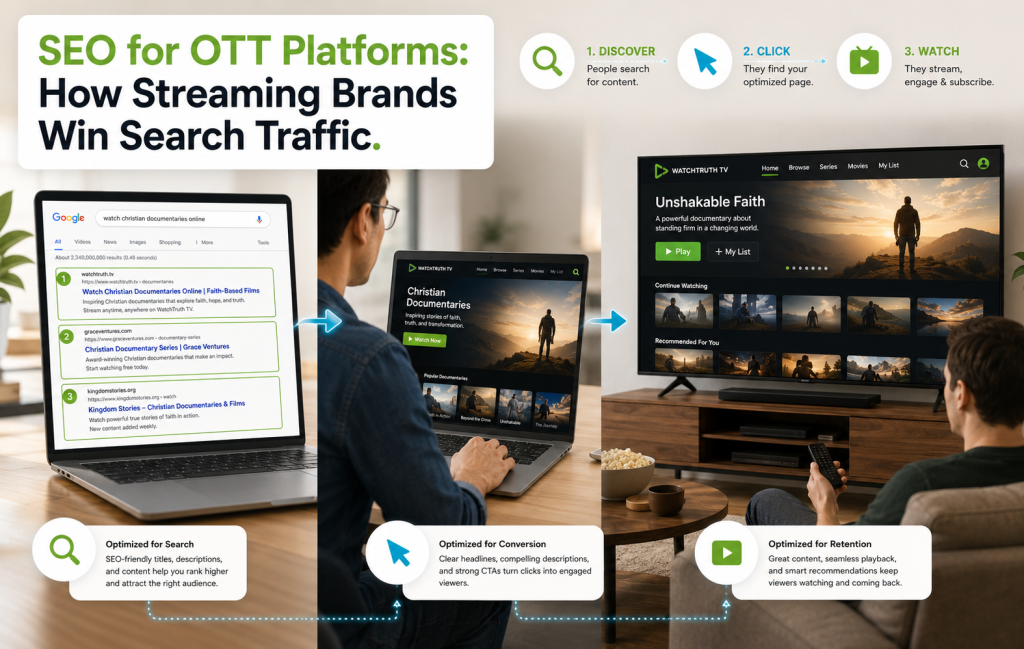
SEO for OTT platforms is one of the highest-leverage growth channels in streaming — and one of the most consistently ignored. Most OTT operators focus on paid social, influencer partnerships, and app store optimization, then wonder why organic traffic to their sites and apps is flat. The reality: viewers actively search for content — by title, by topic, by category, by creator. If your platform doesn’t show up in those searches, you’re leaking discovery to Wikipedia, IMDb, YouTube, and Reddit.
Here’s the SEO for OTT playbook that actually drives subscribers.
What SEO for OTT Actually Covers
SEO for OTT isn’t just blog SEO. Every discoverable page on your platform is an SEO opportunity:
- Content title pages — a page per film, series, or class
- Category and genre pages — “Cooking Shows,” “Documentary Series,” “Faith Content”
- Creator or instructor pages — pages per person, ranked for their name searches
- Series and program pages — hub pages for multi-episode content
- Live event pages — dated pages for upcoming and past live streams
- Blog and editorial content — the traditional SEO surface
- Location or vertical landing pages — for niche audiences
Every one of those pages should be discoverable, indexable, and optimized.
The Big SEO Win: Content Title Pages
The single most valuable SEO for OTT strategy is treating every piece of content as its own SEO asset. Viewers who search “where to watch [film title]” should find your platform. Practical requirements:
- A dedicated URL per title (not a modal or JavaScript-only page)
- Full metadata: title, year, description, cast, runtime, category
- Structured data markup (VideoObject schema)
- Thumbnail with proper alt text
- Related content links (internal linking builds authority)
- A clear “Watch Now” CTA for subscribers, “Start Free Trial” for non-subscribers
Category Page SEO
Category pages (“Best Cooking Shows,” “Christian Bible Studies,” “Documentary Films About the Ocean”) capture high-intent commercial searches. What works:
- One category per URL — don’t fragment across filters
- 200–400 words of unique editorial intro per category
- Curated top 10–20 content in the category, with descriptions
- Internal links to related categories
- Schema markup for ItemList
Blog and Editorial SEO for OTT
Blog SEO isn’t optional. It’s how your platform ranks for the questions your target audience is already Googling. Winning topics for streaming platforms:
- “Best [category] to watch” listicles
- “[Film title] where to watch” pages
- “How to stream [event / genre]” guides
- Creator or filmmaker interviews (rank for their name)
- Behind-the-scenes and production stories
- Comparison content (“[Platform A] vs [Platform B]”)
Technical SEO for OTT
Even great content fails without technical SEO. Fundamentals to nail:
- Server-side rendering for content pages. JavaScript-only apps are hard to index.
- Fast page load — Core Web Vitals affect ranking
- Mobile-first design — Google indexes mobile
- XML sitemap including all title, category, and creator pages
- Canonical tags to prevent duplicate content issues
- Structured data (Schema.org) — VideoObject, ItemList, BreadcrumbList
- Clean URL structure (readable slugs, not query parameters)
Internal Linking as a Growth Engine
Internal linking is what turns dozens of individual SEO pages into a compound growth machine. Each content page should link to:
- 2–3 related titles in the same category
- The category or genre parent page
- The creator or instructor page
- Relevant editorial blog posts
Category pages should link to top titles. Blog posts should link to relevant content and category pages. The result: authority flows through the site.
Measuring SEO for OTT
Track the metrics that connect SEO to subscribers:
- Organic search traffic by page type (title / category / blog)
- Impressions and clicks in Google Search Console
- Signup conversion rate from organic traffic
- Ranking positions for target keywords (title searches, category searches)
- Backlinks earned (especially from reviews, press coverage, and creator sites)
Common Pitfalls
- JavaScript-only pages. If Google can’t render your content title pages, they don’t rank.
- No unique metadata. Every title, every category needs its own title tag and meta description.
- Thin category pages. A page listing 5 titles with no editorial won’t rank against curated third-party lists.
- Blog neglect. Weekly editorial content compounds. Missing weeks costs long-term traffic.
- Ignoring blog analytics. If you’re not tracking which posts drive signups, you’re guessing at content strategy.
Ready to turn search into subscribers? Start your free trial today and build a streaming platform that shows up when viewers search.