

Video Podcast Platform: Why Audio Alone Is No Longer Enough
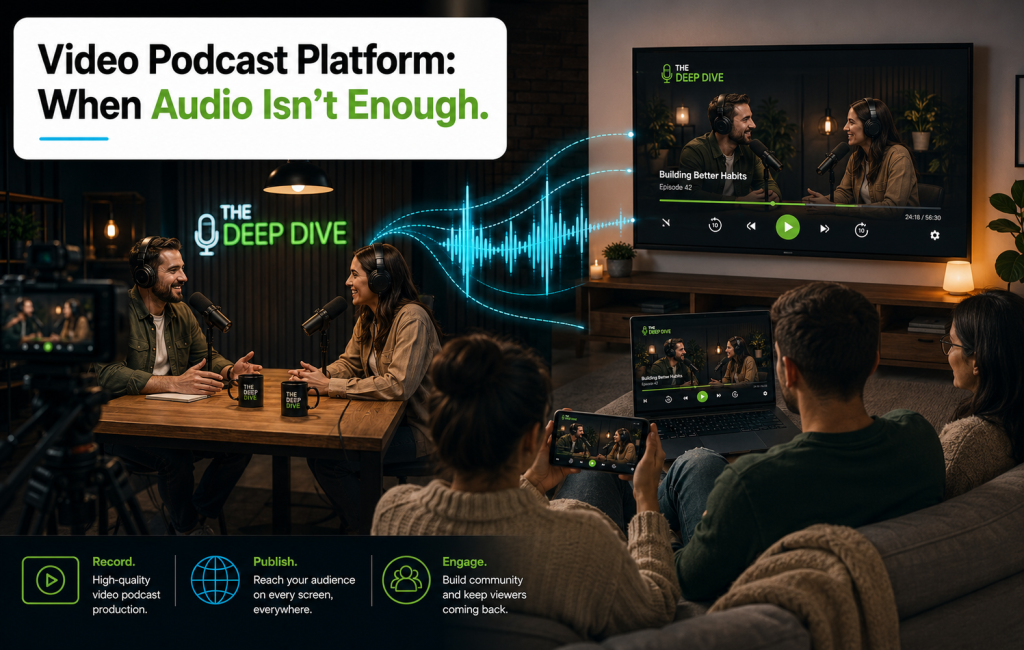
A video podcast platform is what happens when a podcast grows beyond an audio feed. Joe Rogan, Lex Fridman, Diary of a CEO, Huberman Lab, All-In — the biggest podcasts in the world lead with video. Spotify, YouTube, and Apple all built video-podcast surfaces because that’s where the growth is. If you’re producing a podcast in 2026 and you’re not thinking about video, you’re leaving retention, monetization, and audience growth on the table. A proper video podcast platform captures all of that.
Here’s how to build one.
Why Video Podcasts Are Winning
Audio-only podcasts have real limits. Video podcast platforms address every one of them:
- Discovery: YouTube search and social clips discover new audiences that audio directories can’t reach
- Retention: Viewers stay 2–3x longer when they can see the hosts
- Monetization: Video ads pay 5–10x what audio ads pay for the same audience
- Community: Comments, live chat, and Q&A work better with video
- Repurposing: Every episode becomes clips for Instagram, TikTok, LinkedIn, and X
What a Real Video Podcast Platform Includes
Uploading to YouTube isn’t building a platform. A proper video podcast platform is a branded destination that gives you control over the audience, the experience, and the revenue. The core elements:
- A branded video-podcast library on your own domain
- OTT apps so viewers watch on smart TVs, phones, and tablets
- Live streaming for real-time episodes with viewer chat
- Multiple monetization options (subscription, ads, sponsorship, tips)
- Community and comments per episode
- Email capture and lifecycle marketing
- Analytics that show what content drives what behavior
Structure the Content Library
Podcast libraries organize differently from film catalogs. Structure your video podcast platform by:
- Shows — every podcast series has its own hub
- Seasons — grouped runs within a show
- Episodes — chronological, most recent first
- Guest hub — pages per notable guest that aggregate their appearances
- Topics — cross-cutting themes (business, science, philosophy)
- Clips — short-form vertical clips extracted from episodes
Pick the Right Monetization Mix
Video podcasts monetize better than audio because the surface area is bigger. The models that work:
| Model | How It Works | Best For |
|---|---|---|
| Sponsorships | Host-read ads baked into the episode | Established podcasts with proven audience |
| SVOD subscription | Bonus content, ad-free versions, extended episodes | Loyal audiences who’d pay for more |
| AVOD (ad-supported) | Pre-roll and mid-roll ads via ad server | Broader-reach podcasts |
| Membership tier | Community + bonus + early access | Podcasts with strong parasocial connection |
| PPV live events | Ticketed live tapings or special events | Podcasts with in-person or live-streamed events |
Distribution: Own the Destination, Feed Everywhere Else
The trap most video podcasters fall into: they build on YouTube and Spotify, then wake up one day realizing they don’t own the audience. A video podcast platform strategy that works:
- Your Bamboo Site + apps — the primary destination, where you own everything
- YouTube — for discovery and full-episode reach
- Spotify Video — for cross-platform reach
- Audio podcast feed — for listeners who still prefer audio
- Vertical clips — Instagram Reels, TikTok, LinkedIn, X shorts
- Email newsletter — episode announcements + additional context
Each channel drives traffic back to the platform where subscribers, memberships, and direct revenue live.
Live-Recorded Episodes Are the New Standard
Live-recording a podcast — with a real live audience watching in real time — has become one of the most engaging formats. Bamboo Live lets you broadcast the episode as it’s being recorded, with chat and Q&A. The recording flows into your on-demand library the moment you stop streaming.
Production Doesn’t Have to Be Expensive
You don’t need a Rogan-level studio. A workable video podcast setup:
- Two cameras (or a multi-camera setup with a phone rig)
- A switcher (ATEM Mini for hardware, OBS for software)
- Good broadcast microphones (Shure SM7B, Rode PodMic, or similar)
- Basic lighting (softbox or panel per host)
- A quiet room with sound treatment (blankets on walls beats untreated space)
Common Pitfalls
- Skipping video entirely. Audio-only podcasts are becoming a smaller share of new podcast growth.
- Building only on YouTube. YouTube owns the audience if you don’t own the destination.
- Ignoring vertical clips. Short-form clips are the highest-leverage discovery tool available.
- No email capture. Without an email list, algorithm changes on YouTube or Spotify can wipe out audience overnight.
- Single monetization model. Sponsorships alone leave the direct-to-fan revenue untouched.
Ready to launch a video podcast platform? Start your free trial today and launch on every device this week.