

Yoga and Meditation Streaming: One of OTT’s Stickiest Niches
Yoga and meditation streaming sits in a sweet spot most OTT operators don’t fully appreciate. The audience is loyal, the content is evergreen, and the practice itself is daily — which means a well-built platform earns regular logins without having to constantly chase attention. If fitness streaming is a six-days-a-week habit, yoga and meditation streaming is a seven-day one, often with multiple short sessions per day.
Here’s how to build one that actually keeps students coming back.
Yoga Streaming Isn’t Fitness Streaming
Operators often lump yoga and meditation in with the broader fitness category. That’s a mistake. The audience, the practice, and the monetization model are different:
- Audience: Skews older, more female, more consistent — and less interested in sweat metrics than fitness viewers
- Practice: Short daily sessions (10–20 minutes) outnumber long weekly workouts
- Content: Teachers matter more than programs; students follow teachers, not brands
- Price point: Lower than fitness ($9.99–$19.99 vs $19.99–$29.99) but with longer retention curves
- Live: Smaller role than fitness — most practice is on-demand and solo
Build the platform assuming all of the above, not assuming you’re building Peloton with yoga poses.
Structure the Content Library Around Teachers
The organizing principle for yoga and meditation streaming is teachers. Not programs. Not challenges. Teachers.
Structure the library around:
- Teacher pages — a hub for each instructor with their full catalog
- Style — Vinyasa, Yin, Restorative, Hatha, Ashtanga, Guided Meditation, Breathwork
- Duration — 5-minute wake-up, 10-minute reset, 20-minute flow, 45-minute full practice, 60+ for weekend sessions
- Intention — energy, calm, strength, sleep, focus, grief, anxiety
- Level — beginner, intermediate, advanced, seated/accessible
Cross-tag everything multiple ways. A single video might be Vinyasa + 20-minute + energy + intermediate — and all of those filters should surface it.
Pick Pricing That Reflects the Vertical
| Plan | Typical Price |
|---|---|
| Monthly SVOD | $9.99 – $14.99 |
| Annual SVOD | $79 – $129 (20–30% discount) |
| Teacher spotlight tier | $19.99 – $29.99 (premium teachers + exclusive series) |
| PPV workshops | $29 – $99 for 2–6 week deep dives |
Yoga audiences expect reasonable pricing. Overprice and you’ll lose them to free YouTube content. Underprice and you train the market to expect $4.99.
The Live Component Still Matters — Just Differently
Fitness platforms built their live component around leaderboards and competition. Yoga and meditation audiences aren’t there for that. Live sessions in this niche work when they:
- Create a weekly ritual — a Sunday evening restorative class, a Monday morning intention-setting meditation
- Include a small Q&A at the end with the teacher
- Feel personal — not stadium-energy
- Have a quiet, intimate production style, not a high-production studio feel
One or two live sessions per week per teacher is often enough. Many platforms do fewer.
Distribution: The Living Room Is the Primary Screen
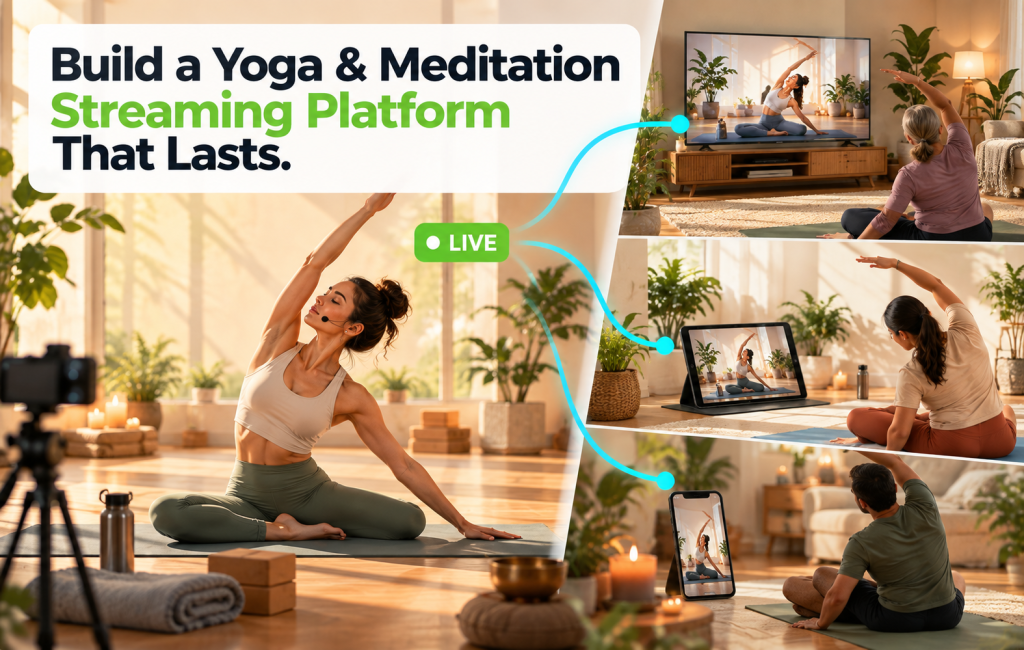
Yoga and meditation students practice at home. The living room TV, a propped iPad, or a quiet corner with a phone — those are the primary surfaces. A yoga and meditation streaming platform needs native apps across the devices that fit:
- iOS and Android for propped tablets and phones
- Roku, Fire TV, Apple TV, Android TV for the living room
- A clean website for the laptop practitioners
Bamboo Cloud’s OTT Apps suite (Business plan) covers all of these from a single content library.
Community Without Overdoing It
Yoga and meditation audiences value community, but not loudly. Features that work:
- Streaks and quiet milestones (“30 days of practice”)
- Favorites and personal playlists
- Teacher follows with gentle notifications when new content drops
- Optional small-group live sessions for members
Avoid chat during practice, aggressive gamification, or leaderboards. The vibe matters.
What to Avoid
- Treating yoga like fitness. Different audience, different expectations.
- Short content library. Yoga students want depth — hundreds of videos across teachers, not dozens.
- Overproduction. A quiet, well-lit room with a camera beats a glossy studio for this audience.
- Ignoring meditation. Students who come for yoga stay for the guided meditations. Build both.
- Launching without 3 teachers. One voice can’t carry the platform. Three or more gives students choice.
Ready to build a yoga and meditation streaming platform? Start your free trial today and launch on every device your students practice from.